
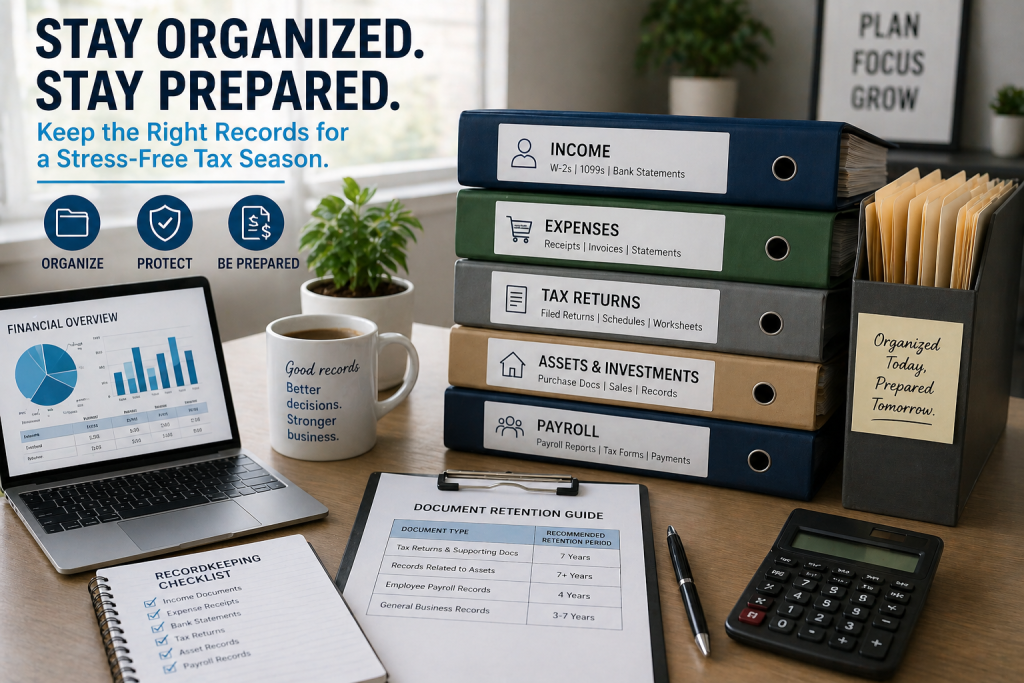
One of the most common challenges individuals and business owners face is knowing what financial documents to keep—and for how long.
Keeping the right records is not just about organization. It plays an important role in:
- Accurate tax filing
- Supporting deductions and credits
- Responding to IRS inquiries if they arise
Having a clear system in place helps reduce stress and ensures you are prepared when it matters most.
Why Proper Record-keeping Matters
Financial documentation provides the foundation for everything related to your taxes.
Without proper records, you may face:
- Difficulty verifying income or expenses
- Missed deductions or credits
- Increased time and stress during tax season
Well-maintained records allow you to operate with clarity and confidence throughout the year—not just at filing time.
Key Documents You Should Always Keep
The specific documents you need will depend on your situation, but the following categories apply to most individuals and business owners.
1. Income Records
These documents verify the income you receive and report on your tax return.
Examples include:
- Forms such as W-2s and 1099s
- Bank deposit records
- Payment processor reports (for businesses)
Accurate income tracking is essential for proper reporting and compliance.
2. Expense Documentation
To claim deductions, you must be able to support them with documentation.
Common examples:
- Receipts
- Invoices
- Bank and credit card statements
For business owners, organized expense tracking is especially important to maintain accurate financial records.
3. Tax Returns and Supporting Documents
You should always keep copies of:
- Filed tax returns
- Worksheets and schedules
- Supporting documentation used during preparation
These records serve as a reference point and may be needed for future filings or reviews.
4. Asset and Investment Records
If you own property, investments, or business assets, it’s important to retain:
- Purchase documents
- Sale records
- Improvement or repair documentation
These records help establish cost basis and calculate gains or losses when assets are sold.
5. Payroll and Employee Records (For Business Owners)
If you have employees, maintaining accurate payroll records is essential.
This includes:
- Payroll reports
- Employee tax forms
- Payment records
Proper documentation supports compliance and helps avoid complications.
How Long Should You Keep These Records?
While specific timelines can vary, many records should be retained for several years.
A general approach includes:
- Keeping tax returns and supporting documents for multiple years
- Retaining records related to assets for as long as you own them (and beyond their sale)
Because retention requirements can vary, it is advisable to review your situation with a tax professional.
From a CPA Perspective
From a CPA standpoint, effective recordkeeping is not just about storing documents—it is about maintaining a system that allows you to access information when needed.
Well-organized records help:
- Ensure accurate tax reporting
- Support financial decision-making
- Reduce stress during tax preparation
A structured approach to documentation allows you to stay prepared year-round.
Practical Tips for Staying Organized
- Keep digital copies of important documents
- Organize records by category (income, expenses, assets)
- Maintain consistency throughout the year—not just during tax season
- Use accounting software or professional bookkeeping support when appropriate
Even simple systems can significantly improve your ability to manage your finances.
Conclusion
Knowing which documents to keep—and maintaining them properly—is an essential part of managing your financial responsibilities.
Whether you are an individual or a business owner, organized records provide the clarity and support needed for accurate tax filing and long-term financial stability.
Why Work With Edith Alvarado, CPA?
Choosing the right professional for your tax and accounting needs is an important decision. Beyond filing requirements, the goal is to work with someone who provides clarity, structure, and long-term guidance.
At E.E. Accounting Solutions LLC, services are led by Edith Alvarado, CPA, with a focus on:
- CPA-Level Expertise
Your tax and financial matters are handled with professional standards and a strong understanding of compliance requirements. - Year-Round Support
Guidance is not limited to tax season. Ongoing support helps you stay organized and prepared throughout the year. - Clear and Practical Communication
Financial topics are explained in a way that is easy to understand, helping you make informed decisions. - Bilingual Service (English & Spanish)
Communication matters. Services are available in both English and Spanish to better support a diverse client base. - Structured and Organized Approach
From bookkeeping to tax preparation, systems are designed to improve accuracy, reduce stress, and support long-term financial stability.
Working with a CPA is not just about compliance—it’s about having a reliable professional who helps you stay on track.
Frequently Asked Questions
How long should I keep tax documents?
Record retention depends on your specific situation, but many tax-related documents should be kept for several years. Documents related to assets or investments may need to be kept longer.
For guidance specific to your situation, it is advisable to consult with a CPA.
Can I keep digital copies instead of paper records?
Yes, digital copies are generally acceptable as long as they are clear, complete, and accessible. Maintaining organized digital records can make it easier to retrieve documents when needed.
What happens if I don’t have all my records?
Missing documentation can make it more difficult to support income or deductions. In some cases, it may still be possible to reconstruct records, but this depends on the situation.
A CPA can help evaluate your options and determine the best approach.
Do I need separate records for personal and business expenses?
Yes. Keeping personal and business finances separate is essential for accurate reporting and proper financial management, especially for business owners.
Is record-keeping only important during tax season?
No. Maintaining records throughout the year helps ensure accuracy, reduces stress, and allows for better financial decision-making.
When should I seek professional help?
If you are unsure about what to keep, how to organize your records, or how your documentation affects your taxes, it may be beneficial to speak with a CPA.
If you would like help organizing your records or ensuring your documentation supports your tax filings, consider speaking with a licensed CPA.
Edith Alvarado, CPA – E.E Accounting Solutions
Schedule a consultation to review your record-keeping and financial organization.